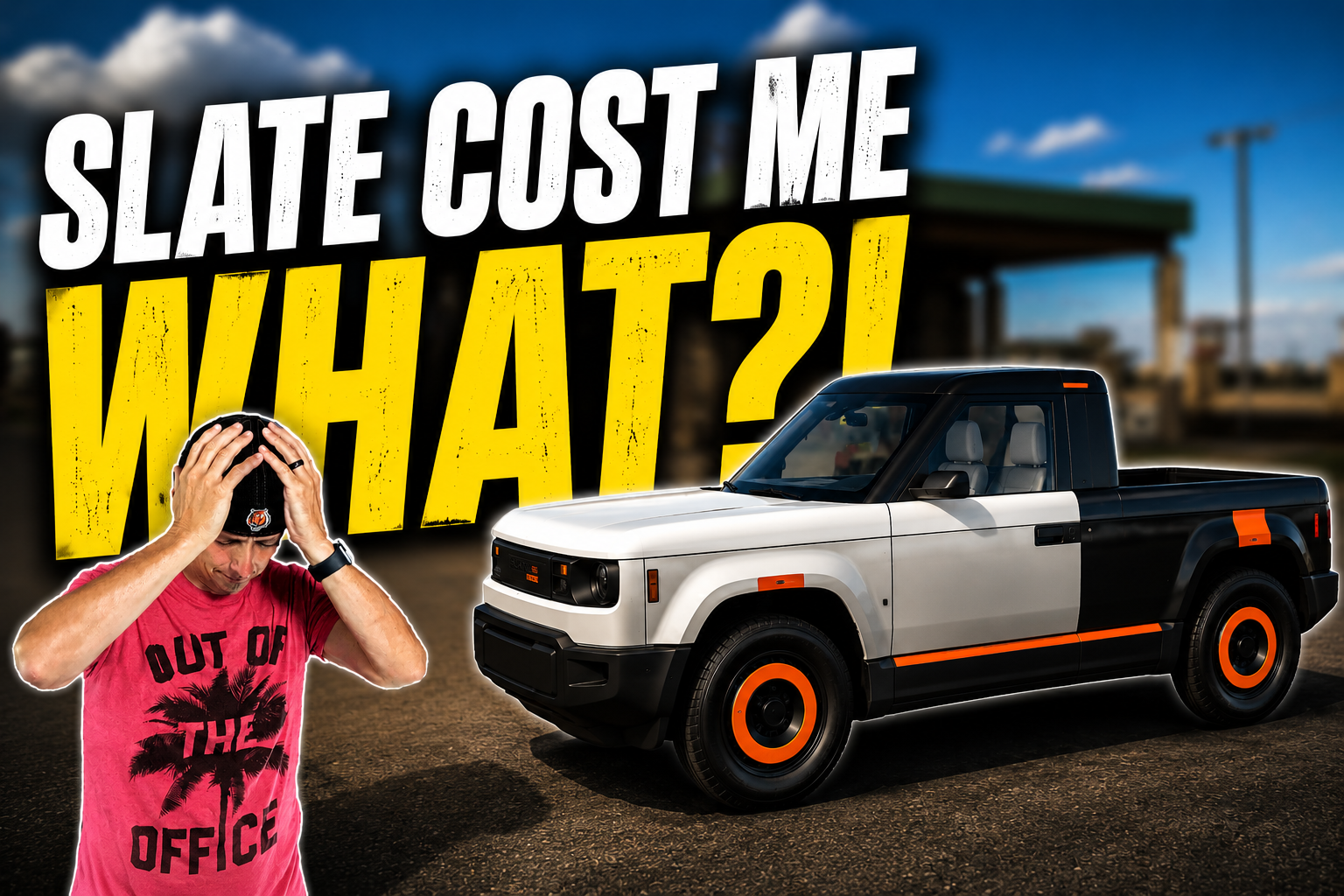
Slate EV Pickup: Still Affordable After Pricing Is Finally Revealed?
When Slate Auto first introduced its compact electric pickup, one number captured everyone’s attention: around $20,000. That claim generated plenty of excitement because it promised something the EV market has struggled to deliver, an affordable electric truck for everyday buyers.
Since then, one major question has been hanging over the startup. With the federal EV tax credit disappearing, would Slate be forced to significantly raise the price of its truck?
Now we have the answer.
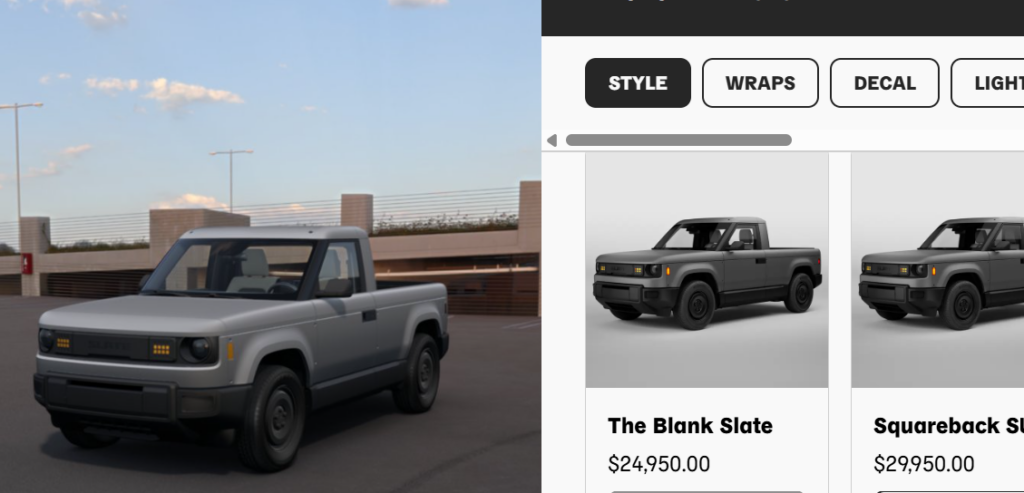
Slate has officially launched its Build & Price configurator, revealing a starting MSRP of $24,950. While that is higher than the original figure many people focused on, it still positions the Slate as one of the least expensive new electric vehicles and arguably the most affordable pickup truck—available in America.
The real question isn’t whether it’s affordable. The question is whether it offers enough value to convince buyers to take a chance on a brand-new startup.
Pricing Finally Revealed
One thing immediately stands out when visiting Slate’s website. The company proudly markets the truck as “The Most Affordable Truck in America.” At first glance, that claim appears difficult to argue with.
The base model is intentionally simple. Slate calls it a “Blank Slate,” giving buyers a basic electric pickup that can be personalized however they choose. Rather than loading the truck with expensive factory equipment, the company encourages owners to build it into exactly what they want.
A Blank Slate for Customization
Perhaps the most interesting feature is its modular design. Buyers can start with a pickup and later convert it into a four-seat SUV with a removable roof, giving the little truck an entirely different personality.
It’s a refreshing approach that feels different from what we’ve come to expect from the automotive industry.
In fact, this idea of customer customization could eventually influence larger manufacturers. Paint shops remain one of the most expensive and environmentally demanding parts of vehicle production. A vehicle designed around wraps, interchangeable panels, and owner-installed accessories could reduce manufacturing costs while giving customers more freedom to personalize their vehicles.
One Battery, More Range
Of course, not every piece of Slate’s updated strategy moved in a positive direction.
Originally, the company discussed offering two battery choices, including a larger long-range pack. That option has disappeared. Instead, Slate now offers a single battery rated at 205 miles of driving range.
While it’s disappointing to lose the larger battery option, the standard range has increased from the originally discussed 150 miles to 205 miles. Whether that change resulted from battery sourcing, engineering improvements, or manufacturing decisions remains unclear, but the added range certainly makes the truck more practical for everyday use.
Interior Options Still Missing Prices
Customization is clearly the centerpiece of the Slate experience.
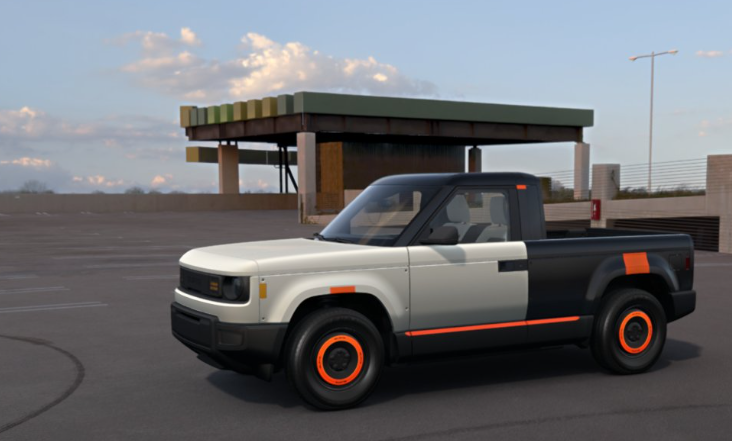
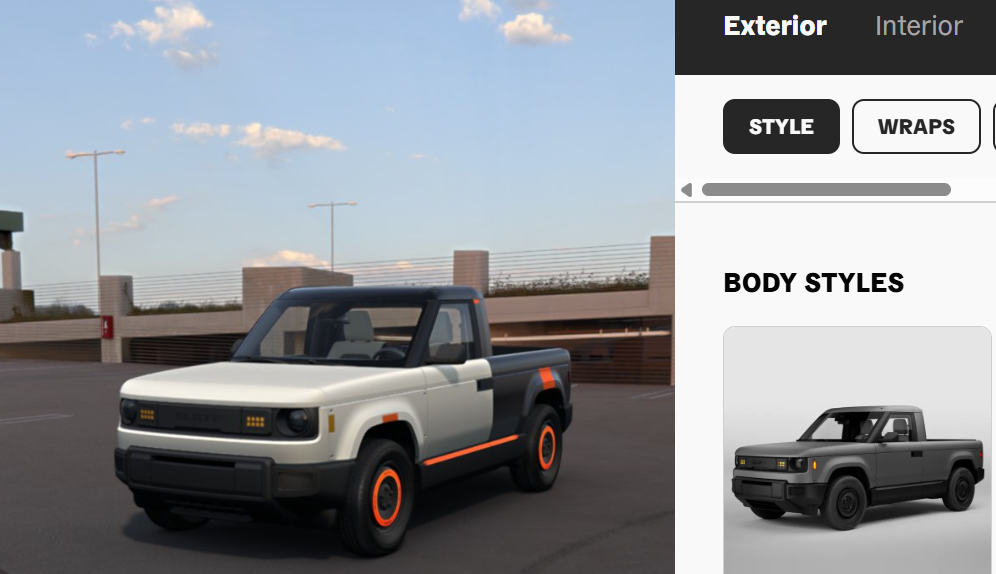
Beyond the base truck, buyers can add vinyl wraps, decals, roof systems, utility racks, lighting packages, suspension upgrades, wheels, and appearance accessories. During our own Build & Price session, adding the wrap we would personally choose increased the total price by only about $800, keeping the vehicle comfortably below the $30,000 mark.
Where pricing becomes more difficult to evaluate is inside the cabin.
Slate showcases numerous interior upgrades, including audio packages, climate-control options, lower dash trim, door bolsters, and additional comfort features. However, many of these accessories are still listed as “Coming Soon,” making it impossible to determine how expensive a fully equipped Slate will ultimately become.
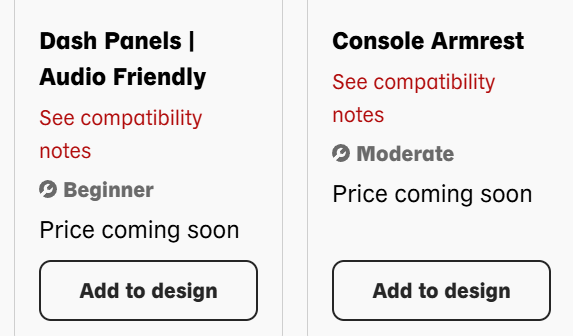
One feature that deserves recognition is how Slate labels its accessories by installation difficulty. Buyers can immediately see whether an upgrade is considered Beginner or Advanced, giving customers a realistic expectation of what they can install themselves.
That may seem like a small detail, but it’s actually one of the smartest features on the website.
Not every buyer is mechanically inclined, and Slate is heavily promoting the idea that owners will personalize and modify these trucks themselves. Having a clear skill rating could reduce frustration while encouraging more people to participate. It’s a feature we wouldn’t mind seeing aftermarket companies adopt as well.
Can Slate Really Compete?
At the end of the day, affordability remains Slate’s biggest advantage.
Even after the updated pricing announcement, our configured truck came in at roughly $25,750 before taxes, title, destination, and registration fees. That’s still an impressive number in today’s new vehicle market.
The challenge is whether buyers will choose a startup electric pickup over proven alternatives. Vehicles like the Ford Maverick XL, Honda Civic, and Nissan Sentra all compete in a similar price range while offering established dealer networks, long-term reliability histories, and widespread service support.
Slate doesn’t have that luxury.
Instead, it must convince customers that its unique approach to customization, simplicity, and affordability outweighs the risks that naturally come with buying from a new manufacturer.
Final Thoughts
We genuinely hope Slate succeeds because the industry benefits from companies willing to challenge traditional thinking. Affordable vehicles have become increasingly rare, and fresh ideas are always welcome.
For now, though, the jury is still out.
The Slate EV Pickup remains one of the most affordable new trucks on the market, but whether that affordability translates into mainstream success is a question only real customers—and time—can answer.
About The Author